PODCAST EPISODE 201
Is AI Getting Better at SEO? Yes, But Read This First
Two questions keep coming up from listeners lately, usually in response to recent episodes about the dangers of having AI do your SEO for you. The first question is whether that means you should not be using AI for SEO at all. The second follows naturally from the first: won't AI just keep getting better at SEO, and at some point be able to handle it entirely?
Both questions deserve a clear answer, because the distinction at the heart of them matters more than almost anything else in SEO right now.
Should You Use AI for SEO?
Yes, absolutely. Professional SEO consultants are using AI in nearly every aspect of their work. Refusing to use AI for SEO in 2026 would be professional suicide for anyone doing this work seriously.
The distinction is between using AI and relying on AI. Using AI means applying it to specific tasks within your SEO campaign, with your data and your strategic direction. Relying on AI means handing it the whole job and expecting it to do your SEO for you. The first approach is essential. The second is where the danger lives.
Out of the box, AI models like Claude and ChatGPT are not SEO consultants. They do have some SEO capability built in. Claude, for example, has a skill called SEO audit that produces something similar to a Semrush audit. Is it as comprehensive and accurate? No. That capability will keep developing, and eventually these tools will connect directly to your Semrush and Google Search Console accounts. When that happens, AI will take a real leap forward in supporting comprehensive SEO. But that is not where we are today.
What Happens to SEO Professionals Who Refuse AI?
A colleague with decades of experience, someone more advanced in SEO knowledge than most people in the industry, decided months ago that AI could not replicate what he does. So he did not adopt it. That reaction is natural, and most experienced professionals have felt some version of it.
This colleague has always been the busiest person in his circle, with no shortage of work for over 20 years. A couple of months ago, for the first time ever, he reached out asking if there was any work available. There is no way to know every reason behind that, but reluctance to adapt AI into his workflow was likely part of it. The lesson applies to photographers and small business owners just as much as it applies to consultants.
How Do You Actually Use AI for SEO?
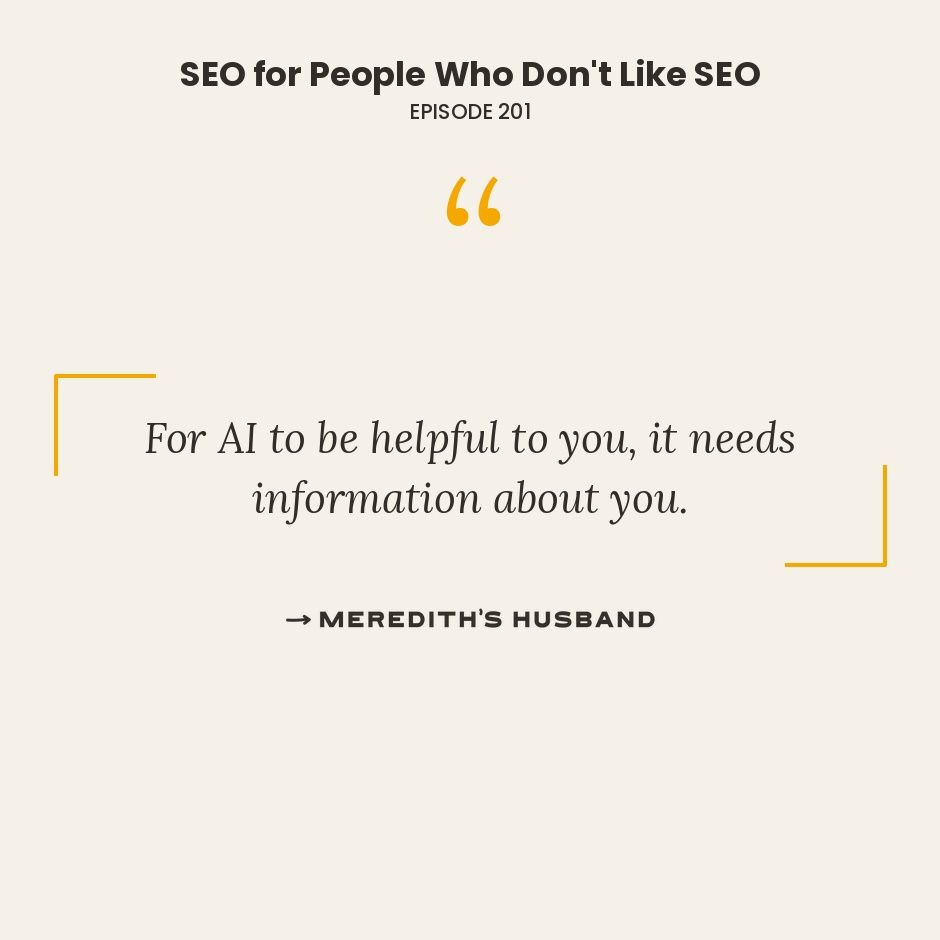
Start with the garbage in, garbage out principle. If you want AI to be helpful to you, it needs your information. Without it, AI is working from generic assumptions, and the output will reflect that.
Building what amounts to your own SEO brain means feeding your AI project the right data:
- Google Search Console exports. Download your performance data and upload it to your SEO project inside whatever AI model you use.
- Keyword research. Semrush is the recommended tool, but whatever you use, gather as much keyword data as you can and add it to your project.
- Website audit results. Run the Semrush site audit and export the full results into your project.
- Competitor research. Identify which competitors rank highly and for what, then use AI to help figure out how they are doing it.
Analyzing large amounts of information is where AI genuinely excels. Keyword research has always been difficult because it requires breaking down and categorizing enormous datasets, work that is painful even for people who love spreadsheets. AI removes that barrier in a big way.
Will AI Ever Do SEO for You Completely?
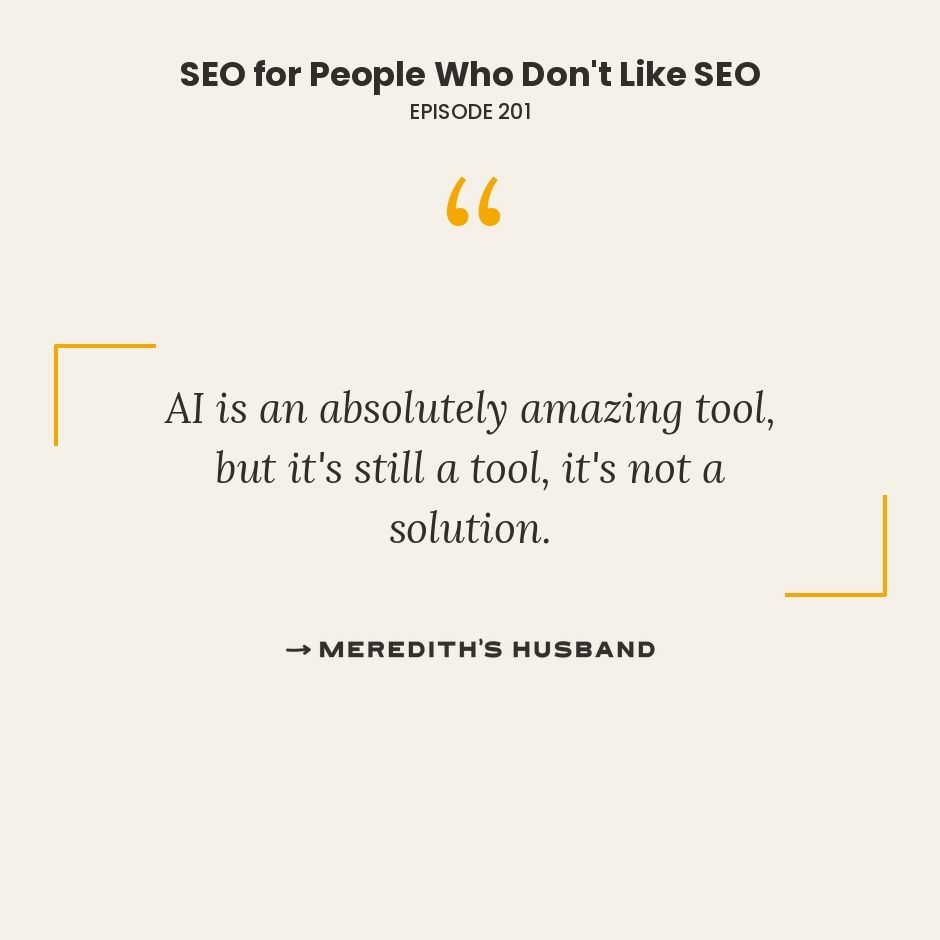
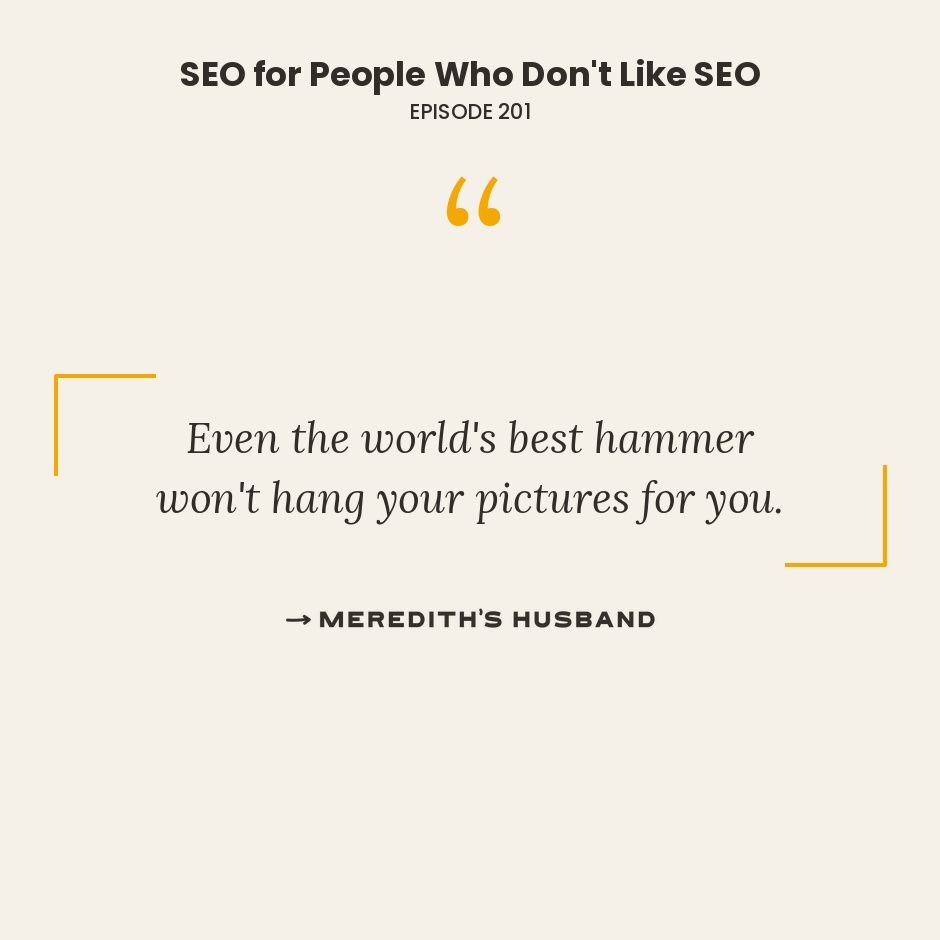
No, and the reason is structural, not technical. AI is an amazing tool, but it is still a tool. Think of it like a hammer. You can buy the nicest hammer at Home Depot, but that hammer is not going to hang your pictures for you. It will not tell you where to put the hole in the wall, whether you need one nail or two, or how to get the frame level. You figure those things out, and then the hammer becomes essential to the job.
Every time a new tool arrives in SEO, people assume the tool eliminates the need for decisions. It never does.
There is also a simple math problem with one-button SEO. Everybody cannot be at the top of Google. When someone asks an AI tool a question, it only surfaces a few responses. If everyone presses the same button and asks AI to do their SEO, that only makes everyone even with each other. Getting ahead requires using AI strategically, with your own data and your own decisions driving it.
Where to Go From Here
If you learn by doing, take the data sources listed above and start feeding your own AI project. That is not everything AI can do for your SEO, but it is a solid start.
If you prefer more guidance, visit meredithshusband.com and sign up for the newsletter. It serves as the waiting list for the next mentoring program, and insiders are notified first and typically receive a discount when enrollment opens.

Become an Insider
Thank you!
Check your inbox for confirmation
Get the SEO+AI Primer
Check Your Inbox!
Pleaase confirm your email address and receive the SEO+AI Primer course.
Check your INBOX and PROMOTIONS folders!